


Файл:VolgaDelta AMO 2005jun11.jpg

Исходный файл (1115 × 1061 пкс, размер файла: 276 КБ, MIME-тип: image/jpeg)
Описание
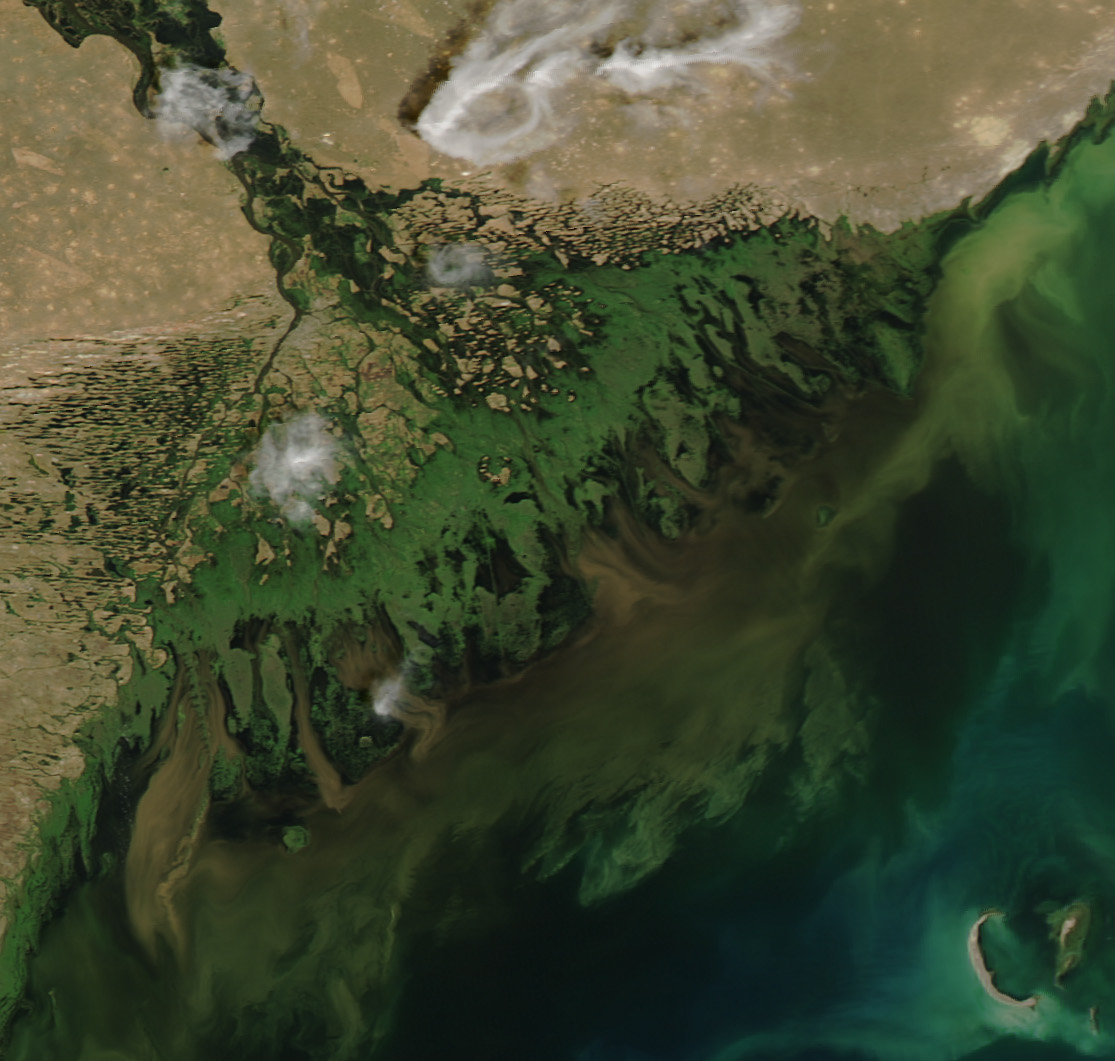
| Описание | Satellite image of the w:Volga Delta at the w:Caspian Sea. This time of year, the river is running high, flushed with melting snow and springtime rain. The flood water has swept dark brown mud into the Caspian Sea. The mud fades to a soupy green as it becomes diluted in the water. While most of the green seen in the Caspian Sea in this image appears to be diluted mud, some may be phytoplankton or w:algal blooms, particularly in the lower right corner of the image. Satellite image of the w:Volga Delta at the w:Caspian Sea. The deep green braids of the Volga River fan into a broad delta on the northwest shore of the Caspian Sea. More than 500 channels flow from the river into the sea, creating a web of wetlands that supports hundreds of species of birds, fish, and plants. The Volga River delta is one of the most productive regions of the world for fish, particularly caviar-producing sturgeon, 25 percent of which live in the Volga River. The delta also contains oil deposits where millennia of carbon-rich mud have piled until pressure and heat converted the organic material in the lowest layers into petroleum. This photo-like image of the delta was taken by the Moderate Resolution Imaging Spectroradiometer (MODIS) on NASA’s Aqua satellite on June 11, 2005. This time of year, the river is running high, flushed with melting snow and springtime rain. The flood water has swept dark brown mud into the Caspian Sea. The mud fades to a soupy green as it becomes diluted in the water. Mud is not the only thing pouring into the sea with the river water. The Volga River is Europe’s longest river, flowing some 3,700 kilometers (2,300 miles) from its source in the Valday hills of northwest Russia to the Caspian Sea. As it winds its way through Russia, it passes through several large cities, and it is lined with agriculture. In its travels, the river picks up agricultural and industrial run-off, and these chemicals are deposited into the Caspian at the Volga River delta. The added fertilizers nourish the algal blooms that grow on the surface of the sea, allowing them to grow larger. When they die, the plants begin to sink and are consumed by bacteria. A thick layer of decaying plants can suck all of the oxygen out of the water, leaving pockets of oxygen-poor water where fish cannot survive. For this reason, large algal blooms can result in fish kills. While most of the green seen in the Caspian Sea in this image appears to be diluted mud, some may be phytoplankton or algal blooms, particularly in the lower right corner of the image. |
|---|---|
| Источник | https://earthobservatory.nasa.gov/images/5650/volga-river-delta |
| Время создания | 2005-06-11 |
| Автор или правообладатель | Jeff Schmaltz, MODIS Land Rapid Response Team at NASA GSFC — Лицензия: Public domain (в общественном достоянии) |
| Другие версии файла | — |
Источник файла — сайт Wikimedia Commons, куда он был загружен под одной из свободных лицензий ( https://commons.wikimedia.org/wiki/File:VolgaDelta_AMO_2005jun11.jpg ). Авторов, работавших над этим файлом см. в истории файла: https://commons.wikimedia.org/w/index.php?title=File:VolgaDelta_AMO_2005jun11.jpg&action=history


В общем случае в статьях энциклопедии Руниверсалис файлы используются в соответствии со статьёй 1274 Гражданского кодекса Российской Федерации.
История файла
Нажмите на дату/время, чтобы увидеть версию файла от того времени.
| Дата/время | Миниатюра | Размеры | Участник | Примечание | |
|---|---|---|---|---|---|
| текущий | 02:59, 4 сентября 2023 | | 1115 × 1061 (276 КБ) | I, Robot (обсуждение | вклад) | == Описание == {{Изображение | описание = <p>Satellite image of the [https://en.wikipedia.org/wiki/Volga_Delta w:Volga Delta] at the [https://en.wikipedia.org/wiki/Caspian_Sea w:Caspian Sea]. This time of year, the river is running high, flushed with melting snow and springtime rain. The flood water has swept dark brown mud into the Caspian Sea. The mud fades to a soupy green as it becomes diluted in the water. While most of the green seen in the Caspian Sea in this image appears to be dilut... |
Вы не можете перезаписать этот файл.
Использование файла
Следующий файл является дубликатом этого файла (подробности):

- Файл:VolgaDelta AMO 2005jun11.jpg на общем хранилище
Следующие 2 страницы используют этот файл:
