


Файл:NASA-KeplerSecondLight-K2-Explained-20131211.jpg


Исходный файл (3119 × 2809 пкс, размер файла: 363 КБ, MIME-тип: image/jpeg)
Описание
| Описание | Kepler's Second Light: How K2 Will Work
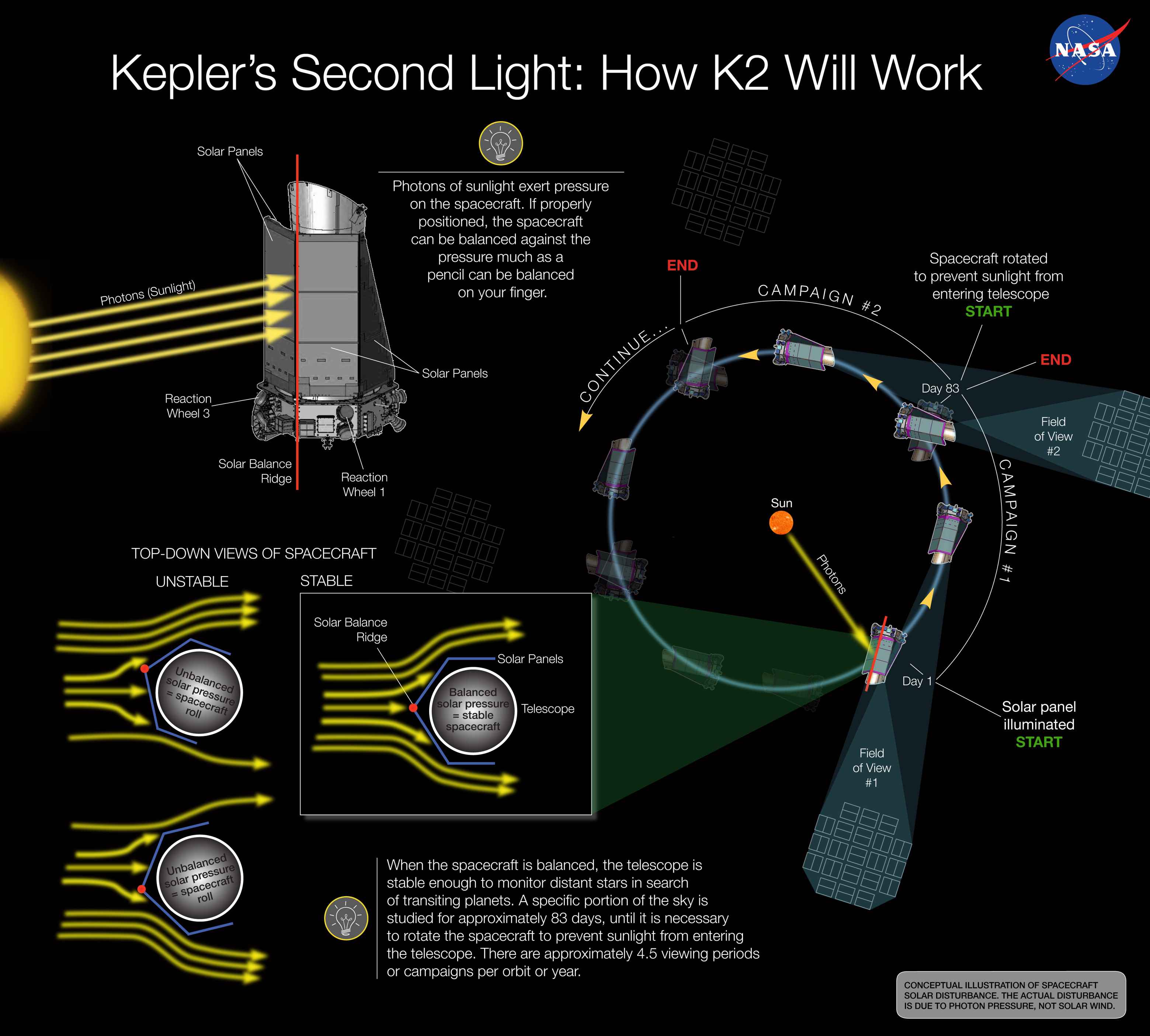
http://www.nasa.gov/kepler/keplers-second-light-how-k2-will-work/ The conception illustration depicts how solar pressure can be used to balance NASA's Kepler spacecraft, keeping the telescope stable enough to continue monitoring distant stars in search of transiting planets. In May, Kepler lost the second of four gyroscope-like reaction wheels, ending new data collection for the original mission. A new mission concept, dubbed K2, would continue Kepler's search for other worlds, and introduce new opportunities to observe star clusters, young and old stars, active galaxies and supernovae. Using the sun and the two remaining reaction wheels, engineers have devised an innovative technique to stabilize and control the spacecraft in all three directions of motion. This technique of using the sun as the 'third wheel' to control pointing is currently being tested on the spacecraft. To achieve the necessary stability, the orientation of the spacecraft must be nearly parallel to its orbital path around the sun, which is slightly offset from the ecliptic, the orbital plane of Earth. The ecliptic plane defines the band of sky in which lie the constellations of the zodiac. K2 would study a specific portion of the sky for up to 83 days, until it is necessary to rotate the spacecraft to prevent sunlight from entering the telescope. Each orbit or year would consist of approximately 4.5 unique viewing periods or campaigns. The K2 mission concept has been presented to NASA Headquarters. A decision to proceed to the 2014 Senior Review – a biannual assessment of operating missions – and propose for budget to fly K2 is expected by the end of 2013. Page Last Updated: December 11th, 2013 Page Editor: Michele Johnson NASA Official: Brian Dunbar |
|---|---|
| Источник | http://www.nasa.gov/sites/default/files/k2_explained_25nov_story.jpg |
| Время создания | 2013-11-24 23:46:59 |
| Автор или правообладатель | NASA Ames/W Stenzel — Лицензия: Public domain (в общественном достоянии) |
| Другие версии файла | — |

Источник файла — сайт Wikimedia Commons, куда он был загружен под одной из свободных лицензий ( https://commons.wikimedia.org/wiki/File:NASA-KeplerSecondLight-K2-Explained-20131211.jpg ). Авторов, работавших над этим файлом см. в истории файла: https://commons.wikimedia.org/w/index.php?title=File:NASA-KeplerSecondLight-K2-Explained-20131211.jpg&action=history


В общем случае в статьях энциклопедии Руниверсалис файлы используются в соответствии со статьёй 1274 Гражданского кодекса Российской Федерации.
История файла
Нажмите на дату/время, чтобы увидеть версию файла от того времени.
| Дата/время | Миниатюра | Размеры | Участник | Примечание | |
|---|---|---|---|---|---|
| текущий | 19:27, 20 ноября 2023 | | 3119 × 2809 (363 КБ) | I, Robot (обсуждение | вклад) | == Описание == {{Изображение | описание = Kepler's Second Light: How K2 Will Work <p>[http://www.nasa.gov/kepler/keplers-second-light-how-k2-will-work/ http://www.nasa.gov/kepler/keplers-second-light-how-k2-will-work/] </p><p>The conception illustration depicts how solar pressure can be used to balance NASA's Kepler spacecraft, keeping the telescope stable enough to continue monitoring distant stars in search of transiting planets. </p><p>In May, Kepler lost the second of four gyroscope-like... |
Вы не можете перезаписать этот файл.
Использование файла
Следующая страница использует этот файл:
