


Файл:HAT-P-7b planet.jpg
Размер этого предпросмотра: 800 × 600 пкс. Другие разрешения: 2560 × 1920 пкс | 4000 × 3000 пкс.


Исходный файл (4000 × 3000 пкс, размер файла: 437 КБ, MIME-тип: image/jpeg)
Описание
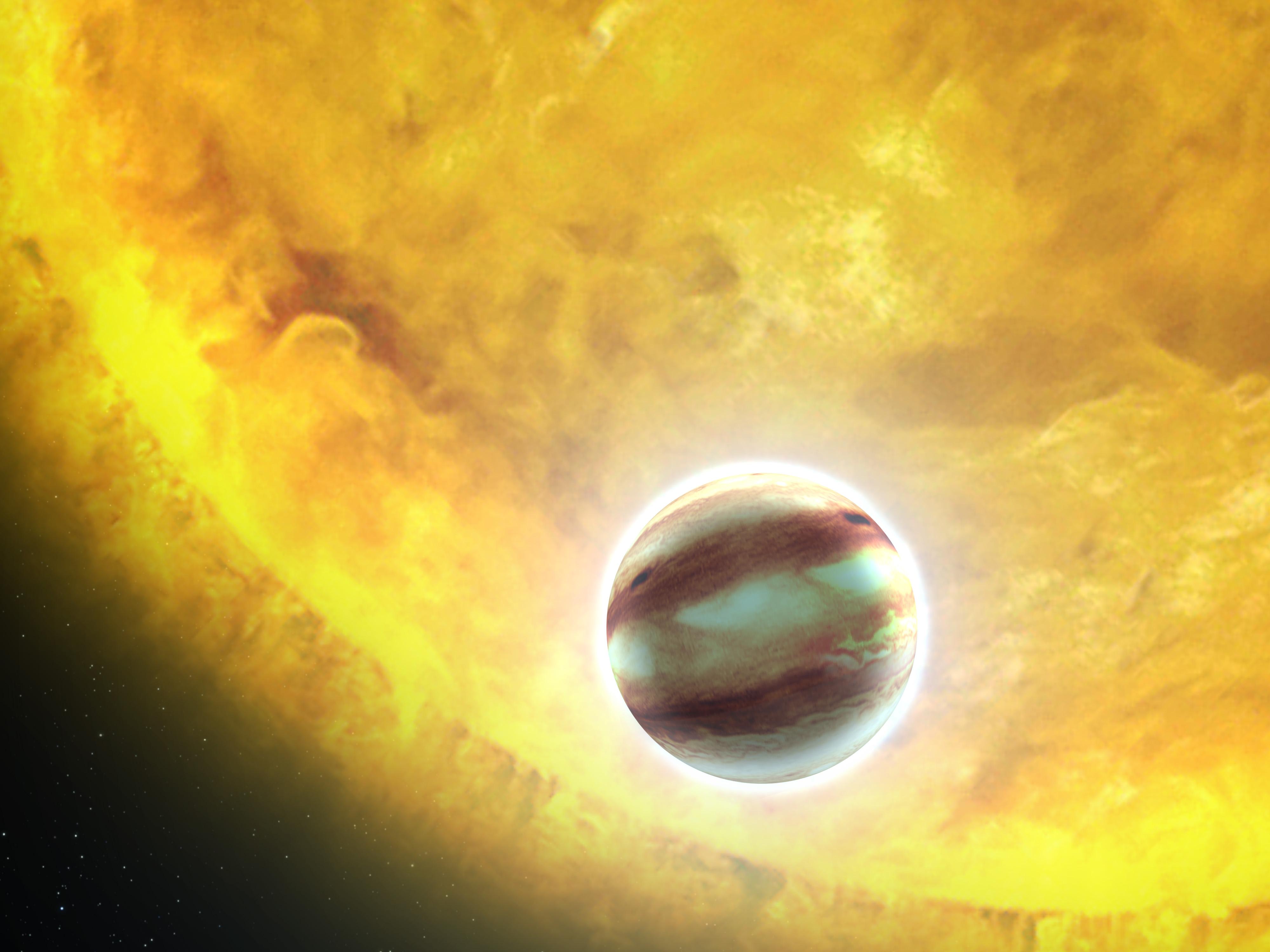
| Описание | This is an artist's concept of that planet, HAT-P-7b. It is a "hot Jupiter" class planet orbiting a star that is much hotter than our sun. Hubble Space Telescope's millionth science observation was trained on this planet to look for the presence of water vapor and to study the planet's atmospheric structure via spectroscopy. Planets with orbits inclined nearly edge-on to Earth can be observed passing in front of and behind their stars. This allows for the planetary atmospheres to be studied by Hubble's spectrometers. Hubble's unique capabilities allow astronomers to do follow-up observations of exoplanets to characterize the composition and structure of their atmospheres. |
|---|---|
| Источник | http://www.nasa.gov/mission_pages/hubble/multimedia/exo-hatp7b.html |
| Время создания | 2012-09-25 22:16:24 |
| Автор или правообладатель | NASA, ESA, and G. Bacon (STScI) — Лицензия: Public domain (в общественном достоянии) |
| Другие версии файла | — |
Источник файла — сайт Wikimedia Commons, куда он был загружен под одной из свободных лицензий ( https://commons.wikimedia.org/wiki/File:HAT-P-7b_planet.jpg ). Авторов, работавших над этим файлом см. в истории файла: https://commons.wikimedia.org/w/index.php?title=File:HAT-P-7b_planet.jpg&action=history


В общем случае в статьях энциклопедии Руниверсалис файлы используются в соответствии со статьёй 1274 Гражданского кодекса Российской Федерации.
История файла
Нажмите на дату/время, чтобы увидеть версию файла от того времени.
| Дата/время | Миниатюра | Размеры | Участник | Примечание | |
|---|---|---|---|---|---|
| текущий | 09:52, 18 октября 2023 | | 4000 × 3000 (437 КБ) | Я, робот (обсуждение | вклад) | == Описание == {{Изображение | описание = This is an artist's concept of that planet, HAT-P-7b. It is a "hot Jupiter" class planet orbiting a star that is much hotter than our sun. Hubble Space Telescope's millionth science observation was trained on this planet to look for the presence of water vapor and to study the planet's atmospheric structure via spectroscopy. Planets with orbits inclined nearly edge-on to Earth can be observed passing in front of and behind their stars. This allows fo... |
Вы не можете перезаписать этот файл.
Использование файла
Следующий файл является дубликатом этого файла (подробности):

- Файл:HAT-P-7b planet.jpg на общем хранилище
Следующая страница использует этот файл:
