


Файл:Epsilon Aurigae.jpg
Размер этого предпросмотра: 763 × 600 пкс. Другие разрешения: 2560 × 2011 пкс | 4200 × 3300 пкс.


Исходный файл (4200 × 3300 пкс, размер файла: 610 КБ, MIME-тип: image/jpeg)
Описание
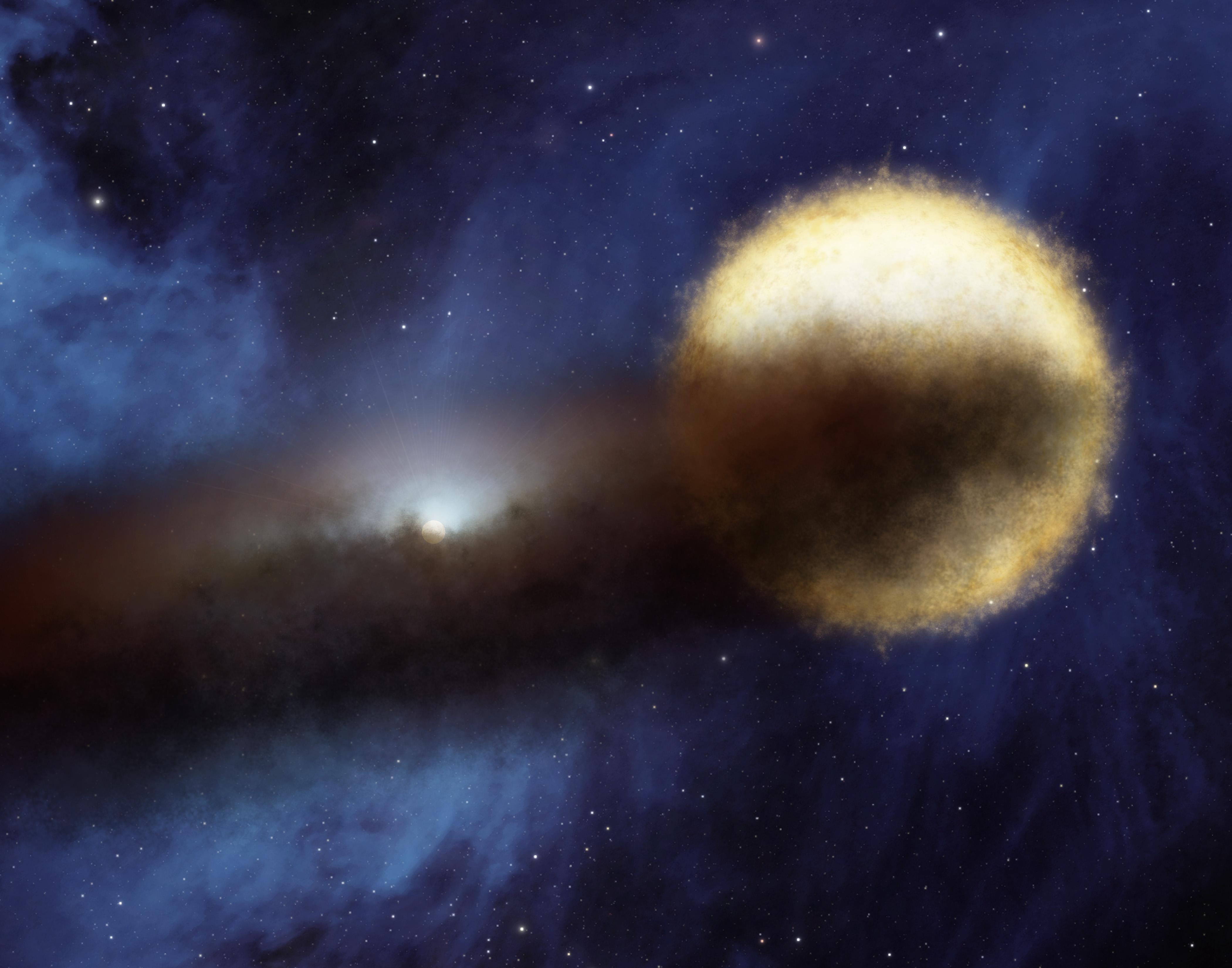
| Описание | Using NASA's Spitzer Space Telescope, astronomers have found a likely solution to a centuries-old riddle of the night sky. Every 27 years, a bright star called Epsilon Aurigae fades over period of two years, then brightens. Although amateur and professional astronomers have observed the system extensively, the nature of both the bright star and the companion object that periodically eclipses it have remained unclear. The companion is known to be surrounded by a dusty disk, as illustrated in this artist's concept. Data from Spitzer finally seems to have solved the riddle. Spitzer's infra-red vision revealed the size of the dusty disk that swirls around the companion object. When astronomers plugged this data into a model of the system, they were able to rule out the theory that the main bright star is a super-giant. Instead, it is a bright star with a lot less mass. The new model also holds that the companion object is a so-called "B star" circled by a dusty disk. |
|---|---|
| Источник | NASA Image of the Day |
| Время создания | 2010-02-03 |
| Автор или правообладатель | NASA/JPL-Caltech — Лицензия: Public domain (в общественном достоянии) |
| Другие версии файла | — |
Источник файла — сайт Wikimedia Commons, куда он был загружен под одной из свободных лицензий ( https://commons.wikimedia.org/wiki/File:Epsilon_Aurigae.jpg ). Авторов, работавших над этим файлом см. в истории файла: https://commons.wikimedia.org/w/index.php?title=File:Epsilon_Aurigae.jpg&action=history


В общем случае в статьях энциклопедии Руниверсалис файлы используются в соответствии со статьёй 1274 Гражданского кодекса Российской Федерации.
История файла
Нажмите на дату/время, чтобы увидеть версию файла от того времени.
| Дата/время | Миниатюра | Размеры | Участник | Примечание | |
|---|---|---|---|---|---|
| текущий | 03:47, 1 ноября 2023 | | 4200 × 3300 (610 КБ) | Я, робот (обсуждение | вклад) | == Описание == {{Изображение | описание = Using [https://commons.wikimedia.org/wiki/NASA NASA's] [https://commons.wikimedia.org/wiki/Category:Spitzer_space_telescope Spitzer Space Telescope], [https://commons.wikimedia.org/wiki/Category:Astronomers astronomers] have found a likely solution to a centuries-old riddle of the night sky. Every 27 years, a bright star called Epsilon Aurigae fades over period of two years, then brightens. Although amateur and professional astronomers have observed... |
Вы не можете перезаписать этот файл.
Использование файла
Следующий файл является дубликатом этого файла (подробности):

- Файл:Epsilon Aurigae.jpg на общем хранилище
Следующая страница использует этот файл:
