


Файл:Bronze statuette of Cybele.jpg


Исходный файл (2848 × 4272 пкс, размер файла: 2,71 МБ, MIME-тип: image/jpeg)
Описание
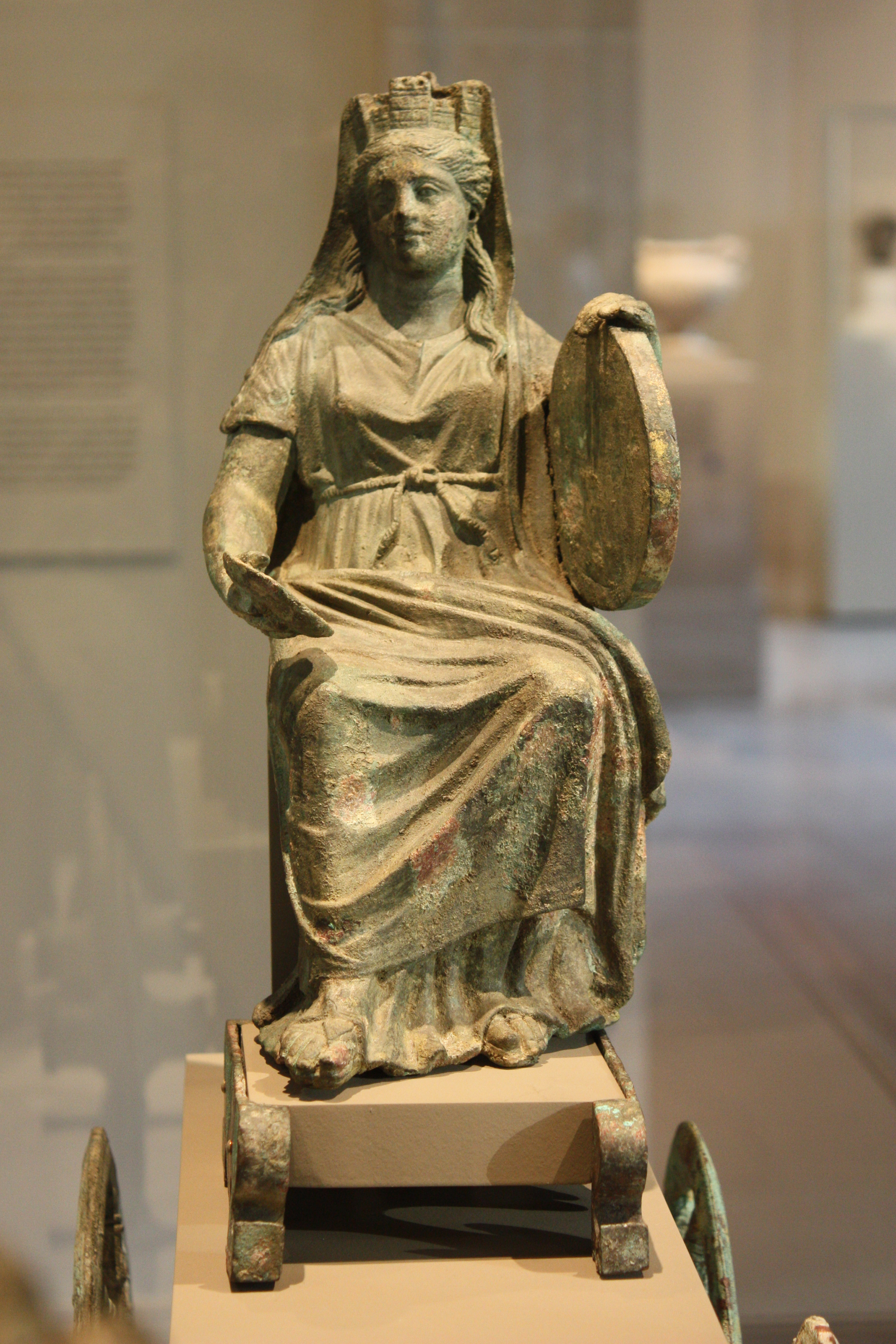
| Описание | Bronze statuette of Cybele on a cart drawn by lions
Roman, 2nd half of 2nd century A.D. The cult of the Anatolian mother goddess Cybele was introduced into Rome during the Second Punic War in the late third century B.C. and remained popular until early Christian times. The goddess is shown with her usual attributes, a patera (libation bowl) in her right hand and a large tympanum (drum) in her left. But instead of flanking her throne as they normally do, here the two oversized lions pull a chariot. This elaborate group comes from a fountain, in which spouts projected from the open mouths of the lions. |
|---|---|
| Источник | Own work |
| Время создания | 2010-10-23 |
| Автор или правообладатель | Peterjr1961 — Лицензия: CC BY-SA 3.0 (Creative Commons Attribution-Share Alike 3.0) https://creativecommons.org/licenses/by-sa/3.0 |
| Другие версии файла | — |
Источник файла — сайт Wikimedia Commons, куда он был загружен под одной из свободных лицензий ( https://commons.wikimedia.org/wiki/File:Bronze_statuette_of_Cybele.jpg ). Авторов, работавших над этим файлом см. в истории файла: https://commons.wikimedia.org/w/index.php?title=File:Bronze_statuette_of_Cybele.jpg&action=history


В общем случае в статьях энциклопедии Руниверсалис файлы используются в соответствии со статьёй 1274 Гражданского кодекса Российской Федерации.
История файла
Нажмите на дату/время, чтобы увидеть версию файла от того времени.
| Дата/время | Миниатюра | Размеры | Участник | Примечание | |
|---|---|---|---|---|---|
| текущий | 19:06, 6 августа 2023 | | 2848 × 4272 (2,71 МБ) | Я, робот (обсуждение | вклад) | == Описание == {{Изображение | описание = Bronze statuette of Cybele on a cart drawn by lions <p>Roman, 2nd half of 2nd century A.D. </p> The cult of the Anatolian mother goddess Cybele was introduced into Rome during the Second Punic War in the late third century B.C. and remained popular until early Christian times. The goddess is shown with her usual attributes, a patera (libation bowl) in her right hand and a large tympanum (drum) in her left. But instead of flanking her throne as they n... |
Вы не можете перезаписать этот файл.
Использование файла
Следующий файл является дубликатом этого файла (подробности):

- Файл:Bronze statuette of Cybele.jpg на общем хранилище
Следующие 4 страницы используют этот файл:
