


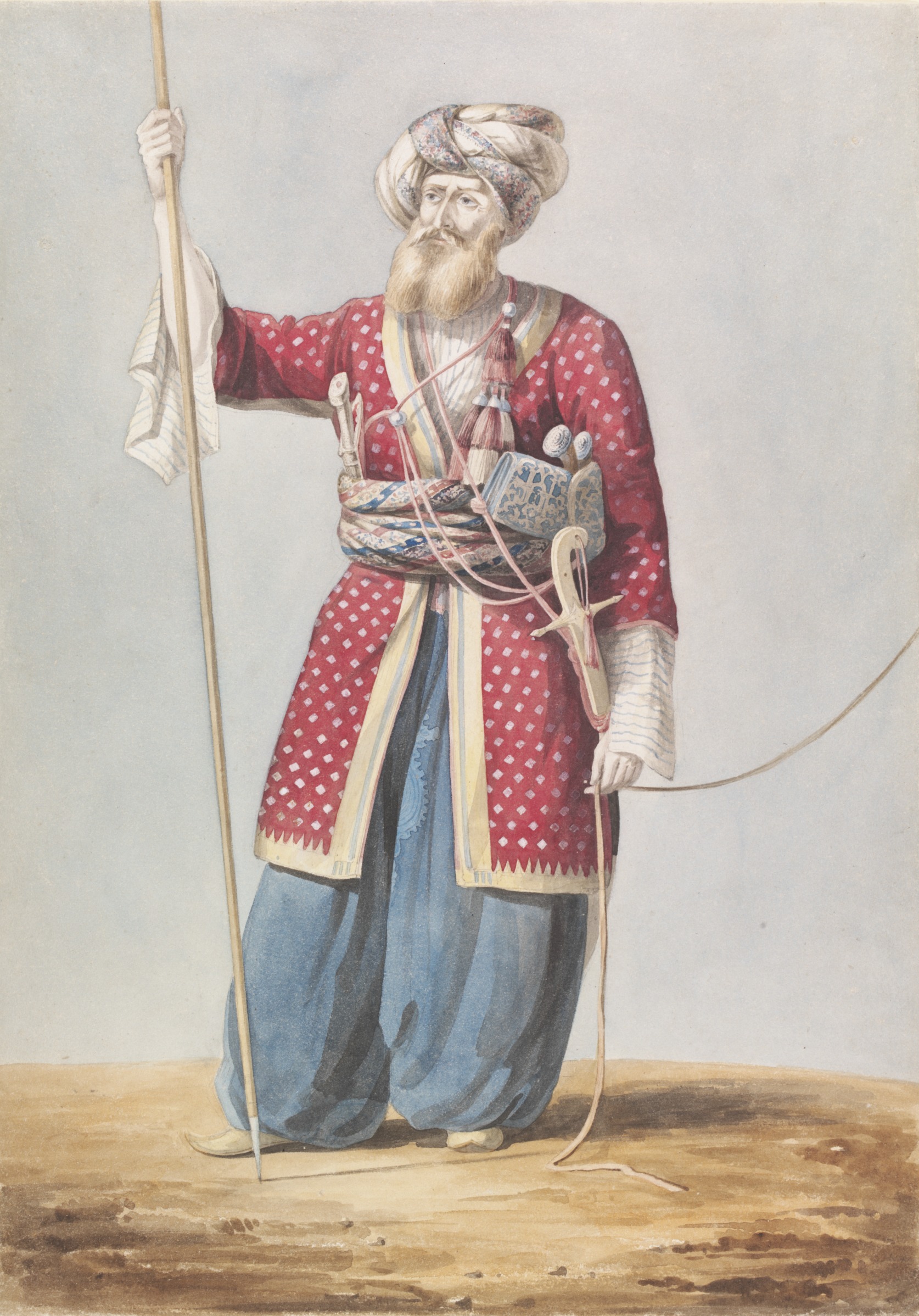
Файл:A Mamluk from Aleppo.jpg

Исходный файл (1674 × 2396 пкс, размер файла: 888 КБ, MIME-тип: image/jpeg)
Описание
| Описание | The Mamluks (literally `owned’, i.e., slaves) had controlled Egypt from 1250 until the Ottoman conquest of 1516-17, yet even then they still continued to govern Egypt for the Ottoman Sultan, while paying tribute. Originally they had been a military caste of former slaves serving the Egyptian sultans. Young boys, mainly Kipchak Turks from regions north of the Black Sea, were bought from slave dealers and trained as warriors by previous generations of Mamluk amirs or commanders. They were set free on reaching adulthood, given a horse and arms, and then took employment with their former masters. In 1250, a group of Mamluk generals seized power from the Ayyubid dynasty, and ruled Egypt, even after the Ottoman conquest, until the time of Napoleon’s invasion in 1797. Under the Mamluk Sultan Baybars, they had even defeated the Mongols in a pitched battle in 1260. Although to the end spectacularly brave horsemen, their power slowly declined. The Egyptian economy was weakened by the rise of European trading rivals and new trade routes, and by devastating visitations of the plague. After surviving the invasion by the French, and then the British, the Mamluks struggled on. Yet, apart from a few survivors, the most prominent were finally eliminated in a treacherous massacre by the new ruler of Egypt, the Albanian general Muhammad Ali in 1811.
|
|---|---|
| Источник | https://collections.vam.ac.uk/item/O147702/watercolour-a-mamluk-from-aleppo/ |
| Время создания | between circa 1816 and circa 1824 (painted) |
| Автор или правообладатель | Page, William, born 1794 - died 1872 (painter) — Лицензия: Public domain (в общественном достоянии) |
| Другие версии файла | — |
Источник файла — сайт Wikimedia Commons, куда он был загружен под одной из свободных лицензий ( https://commons.wikimedia.org/wiki/File:A_Mamluk_from_Aleppo.jpg ). Авторов, работавших над этим файлом см. в истории файла: https://commons.wikimedia.org/w/index.php?title=File:A_Mamluk_from_Aleppo.jpg&action=history


В общем случае в статьях энциклопедии Руниверсалис файлы используются в соответствии со статьёй 1274 Гражданского кодекса Российской Федерации.
История файла
Нажмите на дату/время, чтобы увидеть версию файла от того времени.
| Дата/время | Миниатюра | Размеры | Участник | Примечание | |
|---|---|---|---|---|---|
| текущий | 01:27, 6 сентября 2023 | | 1674 × 2396 (888 КБ) | I, Robot (обсуждение | вклад) | == Описание == {{Изображение | описание = The Mamluks (literally `owned’, i.e., slaves) had controlled Egypt from 1250 until the Ottoman conquest of 1516-17, yet even then they still continued to govern Egypt for the Ottoman Sultan, while paying tribute. Originally they had been a military caste of former slaves serving the Egyptian sultans. Young boys, mainly Kipchak Turks from regions north of the Black Sea, were bought from slave dealers and trained as warriors by previous generations of... |
Вы не можете перезаписать этот файл.
Использование файла
Следующий файл является дубликатом этого файла (подробности):

- Файл:A Mamluk from Aleppo.jpg на общем хранилище
Следующая страница использует этот файл:
